Knit Crime Control Theater

Knit Crime Control Theater, 2023; Plastic crates, 2-color photo lithography
In the early 1980s, a dairy farm in Des Moines, Iowa printed the image of a missing child on the side of their paper half-gallon milk cartons. In spaces typically reserved for paid advertisements and self-promotions, the sides of milk cartons featured portraits and biographical details (birthdate, height, weight and other physical attributes) alongside contact information for tip lines. The hope was that through this publicity campaign, which eventually spread to national dairy producers, abducted children will find their way home through this public/private partnership.
By the late 1980s, activists and researchers debated the efficacy of this campaign. They stated that statistically, not that many children were found as a direct result of the program, and by the late 1980s, this technique had all but stopped. However, the image of a missing child’s photo on a milk carton remains imprinted in the minds of the American public.
In criminology, crime control theater describes public policies or awareness campaigns that are highly visible and provide a reassuring illusion that something is being done about a horrifying threat, even if the actual mechanism is structurally ineffective or targets an exceedingly rare phenomenon. This milk carton campaign was named as a clear example of crime control theater: highly visible, but practically ineffective.
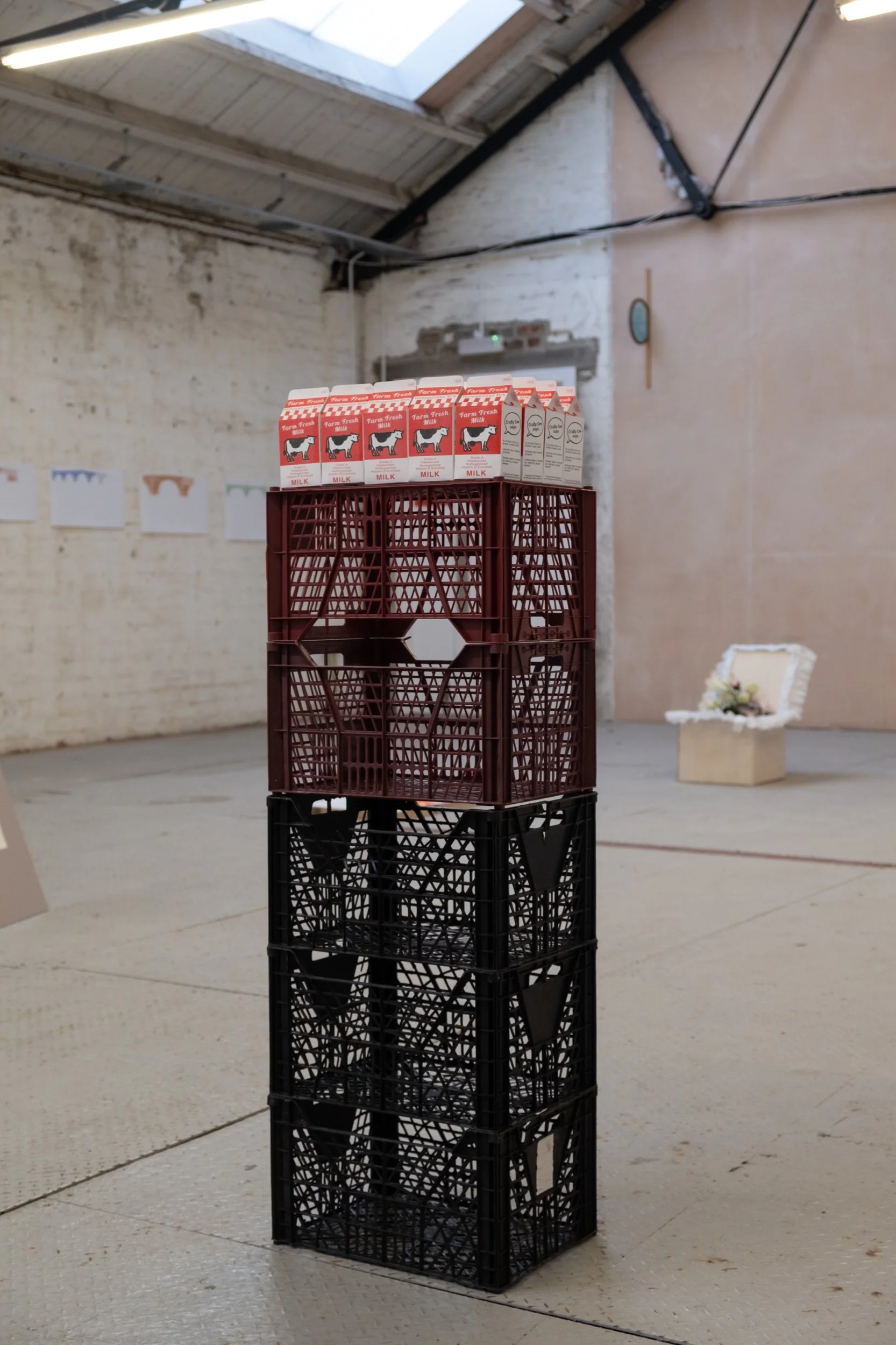


This lithograph edition leans into that theater but replaces a child’s portrait with the image of a dropped knit stitch. As every crafter knows, finding a dropped stitch after several rows of work can sometimes be a nightmare for a knitting or crochet project. By subverting the serious nature of a missing child advertisement with something as arbitrary as a dropped stitch, I am making a connection between the crime control theater used to placate the American public and the relatability of a textile technique.
Process Video, Knit Crime Control