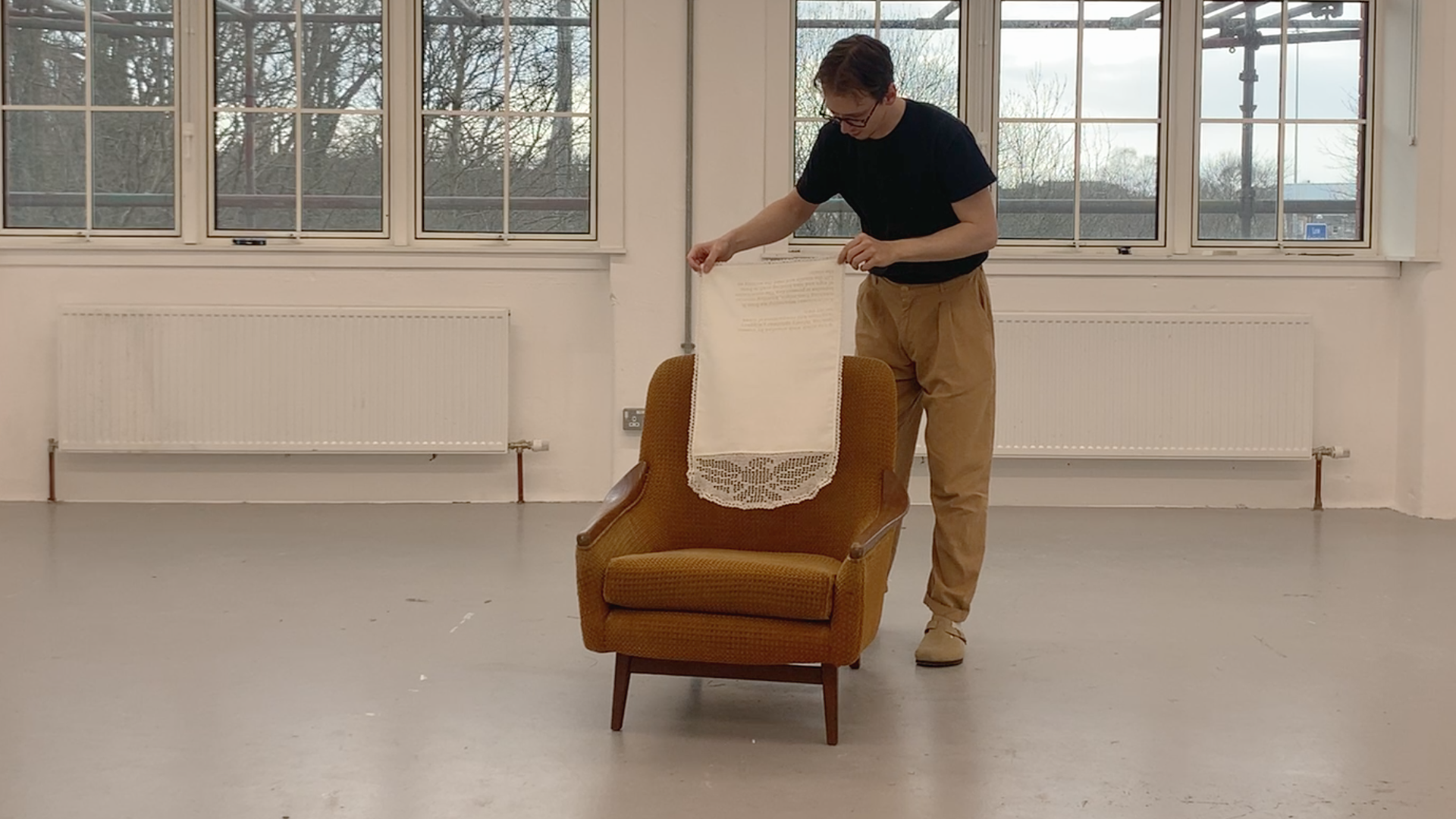
Underneath the Antimacassar
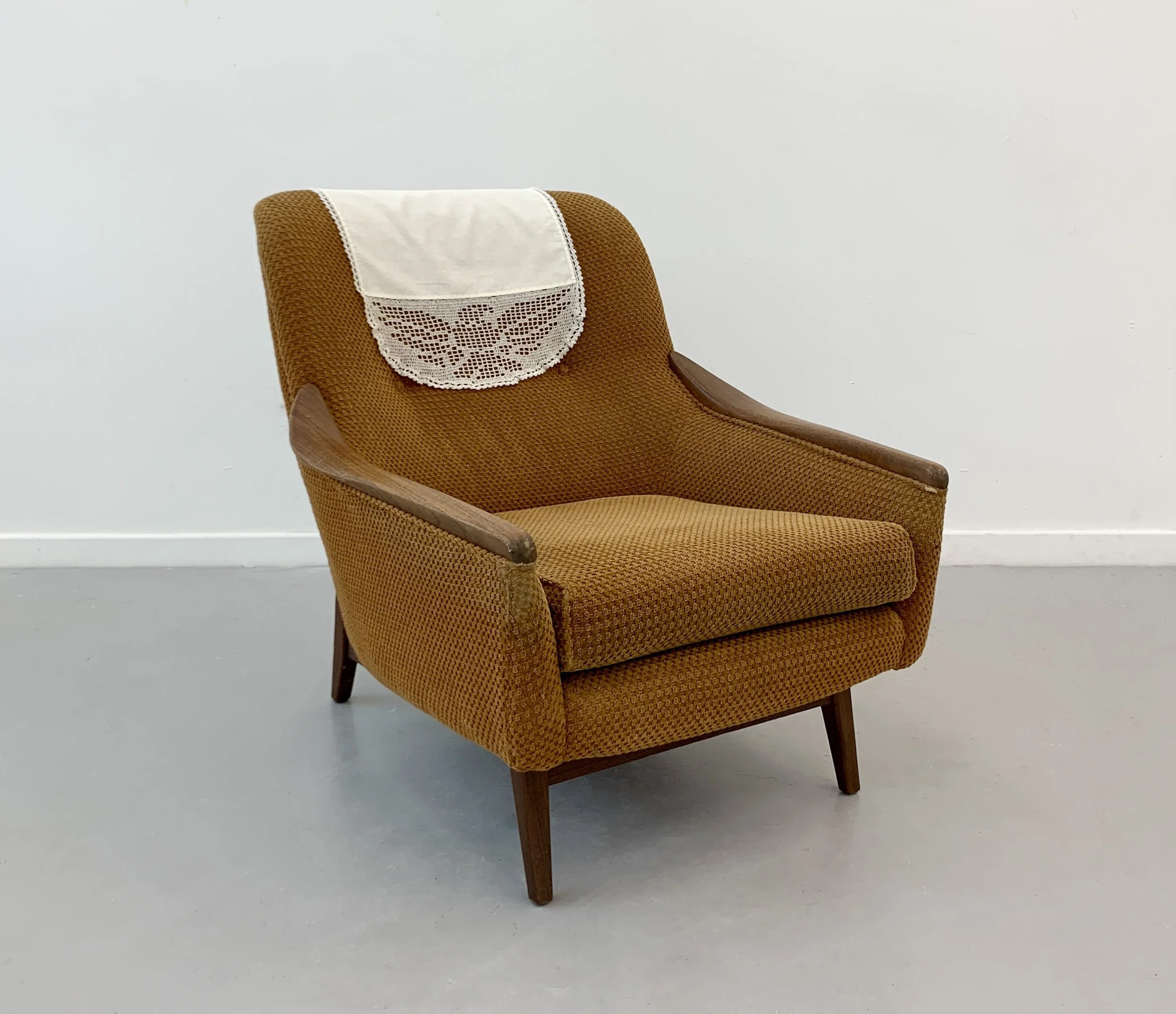
Underneath the Antimacassar, 2026
“White stitch work attached by unseen tacking. Velvety upholstery, slippery language, and the compulsions of times not my own. Antimacassar separating me from it, meaning from origin, knotting colonial legacies to present day. The constitution of sign and idea binding craft to form. Lift the mantle and read the writing on the chair.”

This text is embroidered in cream thread on white cotton, mimicking the Frisian whitework of the 1600s. The text was inspired by a similar reflection on the word ‘antimacassar’ by Lee Ann Roripaugh. Diverse production and research methods allow one piece to reference our social and political histories with a focus on imperial craft.
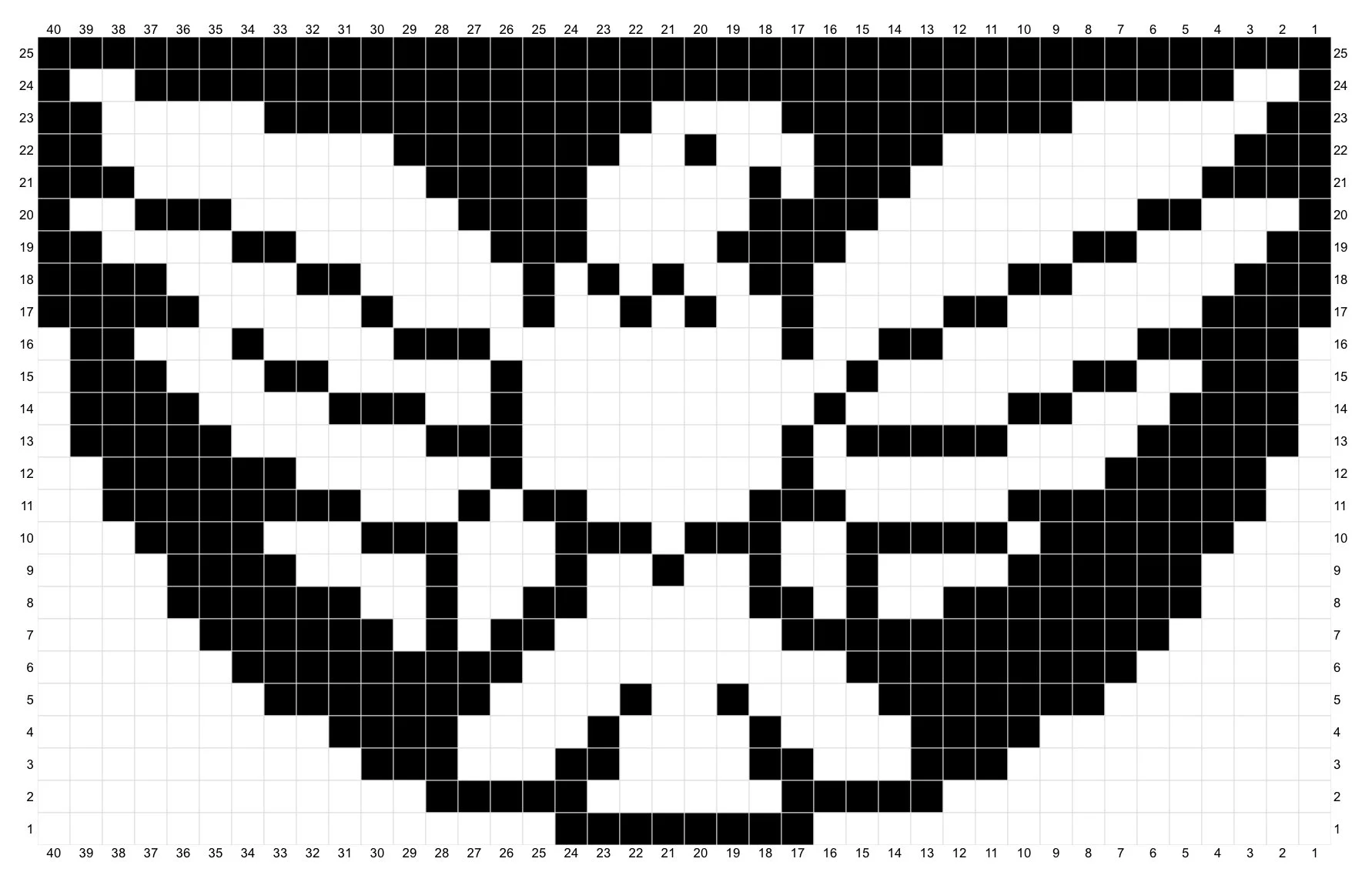
In Progress, Filet Crochet pattern
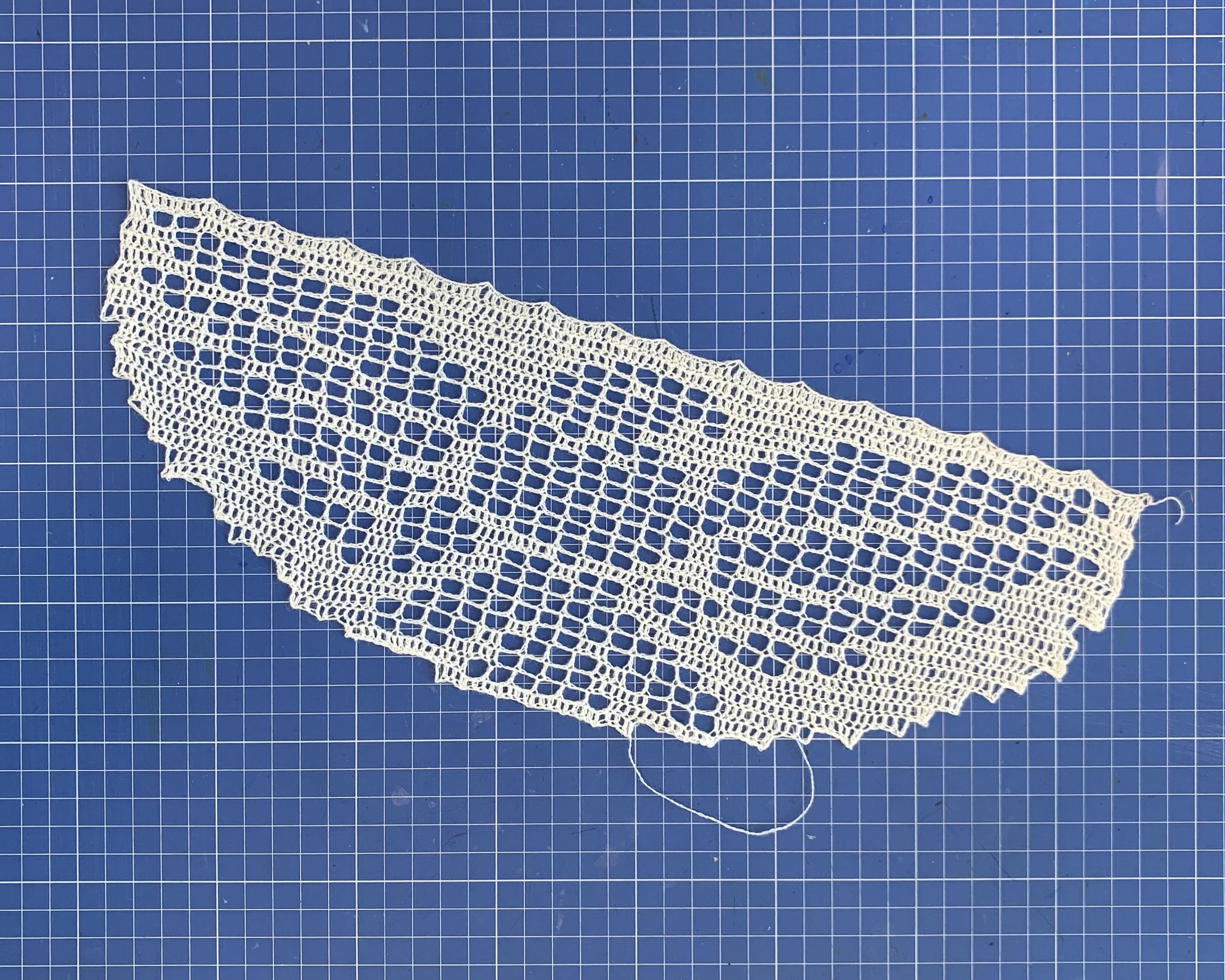
In Progress, Filet Crochet lace
The initial steps of making a doily includes drafting a pattern and crocheting the lace details. This bird motif represents the Garuda, a Hindu god and mythological bird important to Indonesian heritage. On Indonesia’s national crest, we see the Garuda with outspread wings, similar to the United States spread eagle motifs that permeate many of its governmental bodies.
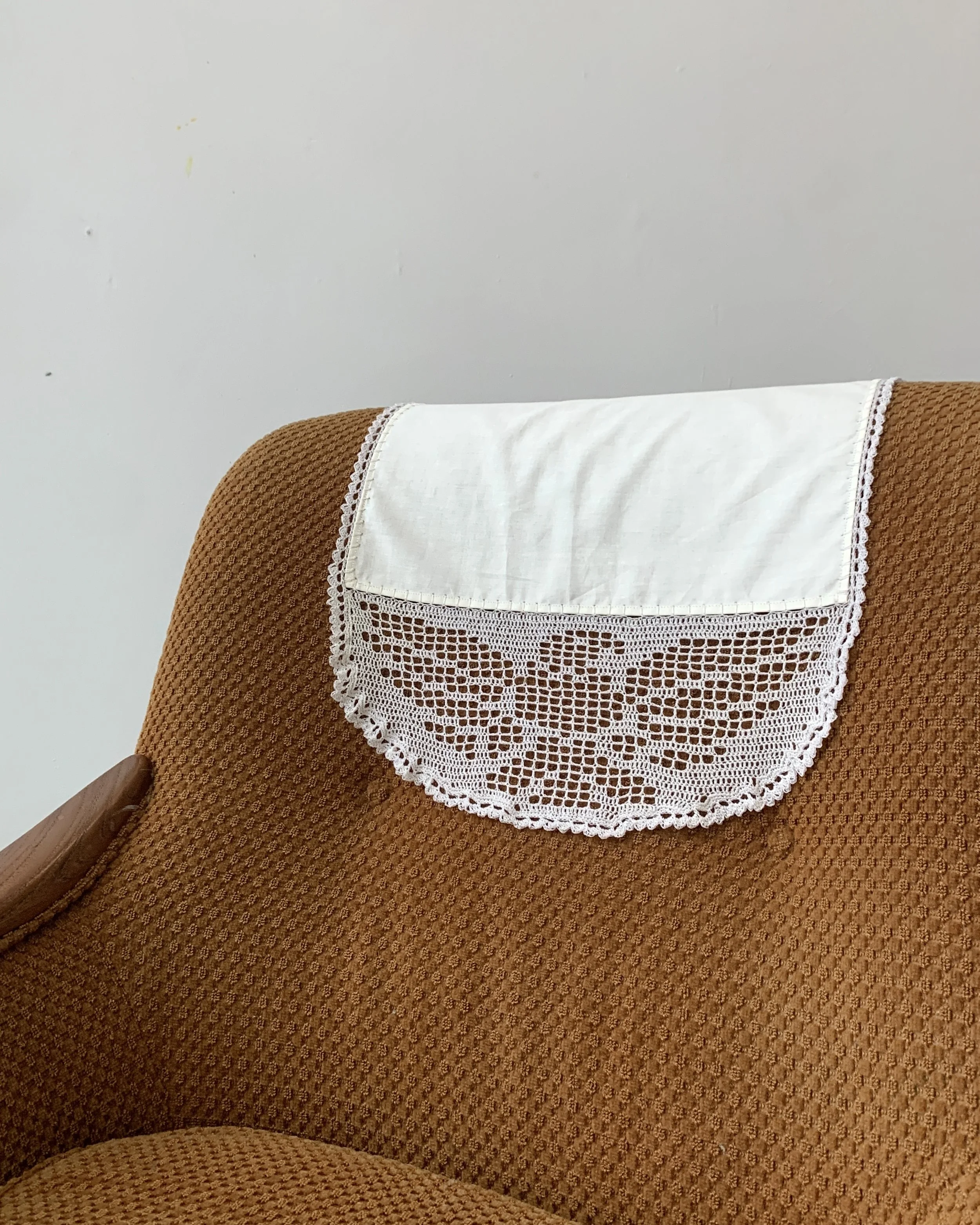
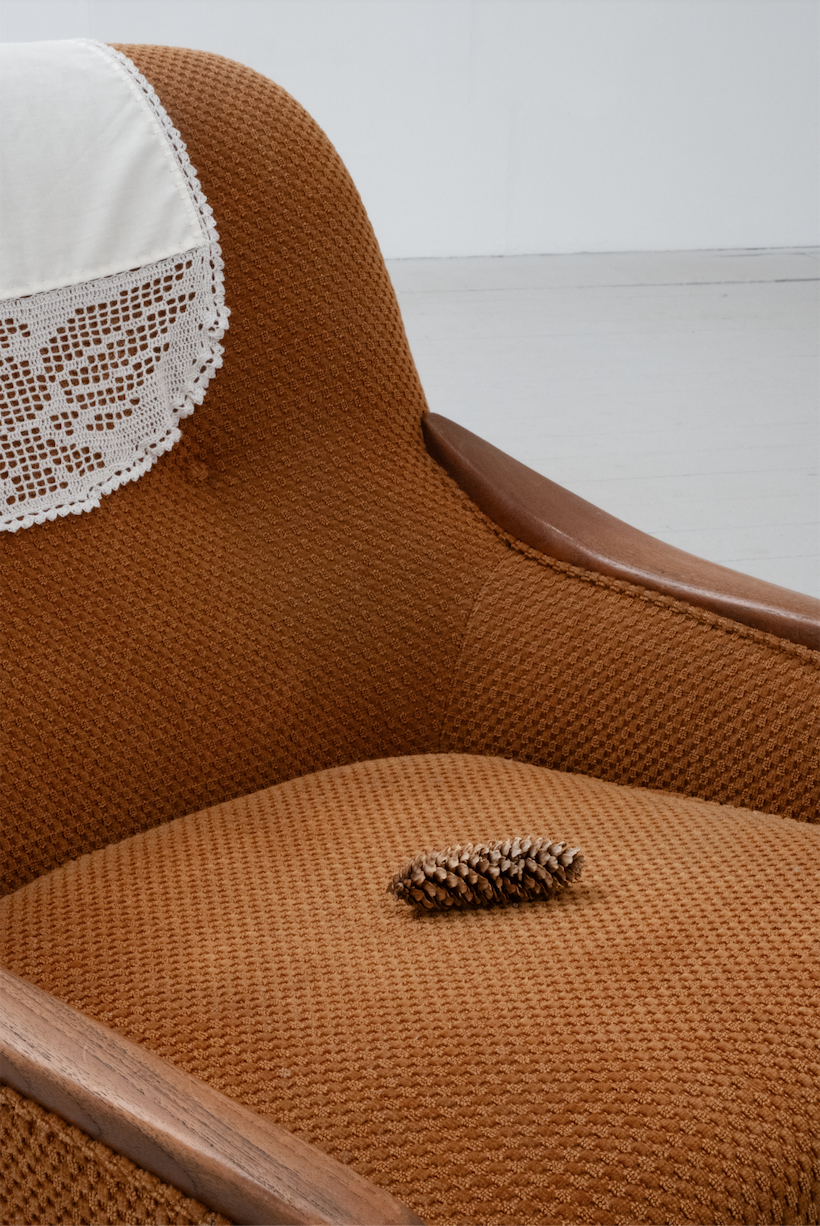
Learning about the history of antimacassars, or chair doilies, led me to the story of how the language and function of these textile objects are born from the Dutch colonization of Indonesia. Something as innocuous as a lace doily can be steeped in colonial history and contribute to the craft of empire.